

Zensei® Exit

Exit Terms & Concepts to know

Exit Terms & Concepts to Know

  • Exit Plan: Strategic framework for business divestiture
  • Exit Mindset: Mental preparation for business transition
  • Types of Sale to Avoid: Fire Sales.
  • Types of Income: Fixed versus Variable compensation structures
  • Types of Sales: Different transaction structures including Acquisition, Acqui-hire, and Management Buy-Out (MBO)
  • Due Diligence: Comprehensive investigation process
  • Methods of Exit Agreement: Including Purchase Sale Agreement (PSA) and Installment Sale Agreement
  • Types of Payment: Various compensation methods
  • Valuation Methods: Including Multiples and EBITDA & Owner Replacement Value
  • Asset Viability Test (AVT): Framework for assessing business sustainability
  • Decision Fatigue: Degradation of decision quality over extended periods
  • Expansive Time Fallacy: Misconception about future time availability
  • Future Buyer, Killing Your Darlings & Leverage: Strategic positioning concepts
  • MAYA Principle & Parkinson’s Law: Business psychology frameworks
  • Wealth Quotient Value (WQV): Personal wealth measurement methodology

Exit Plan =

#ExitNumber ($) + #ExitDate (DD/MM/YR).

Exit Number is the monetary number ($) that you will sell your interest to another person or entity.

Exit Date is the Date YOU as company owner will leave your company.

Exit Number

The monetary value at which you sell your interest.

Exit Date

The specific date you plan to leave your company.

Exit Mindset

Exit Mindset is where every act/creation/partnership goes towards your actual Exit Plan.

Every Act

Each action contributes to the exit plan.

Every Creation

All new developments align with the exit strategy.

3 Every Partnership

Collaborations are formed with the exit in mind.

TYPE OF SALE to AVOID:

Fire Sales

Fire Sales happen when the Seller wants to sell the company at whatever minimum cost to a Buyer as if it’s on “fire” and needs to be unloaded quickly.

Urgency

Seller needs to unload quickly.

Minimum Cost

Company sold at the lowest possible price.

Types of Income: Fixed v. Variable

Fixed Income

Usually guaranteed payments on a monthly or quarterly timed schedule. There is an underlying, recurring revenue contract upholding this income stream. Predictability of payments is paramount. Your client’s LTV (Lifetime Value) is expanded once a product/service resulting in fixed income is introduced.

Variable Income

One-off events, products or services. Due to market trends, inflation, customer preferences – these factors can have a detrimental effect on the scalability of the variable income of your business. Your client’s TV (Transactional Value) is limited to the cost of that singular product.

Types of Sales

Acquisition:

A company or entity completely buys an asset or another company. Different than Mergers where 2 companies become one and both Seller and Buyer still have access to the new, merged company. In an Acquisition, Buyer usually acquires the whole Company or Asset outright. Seller loses ownership and access to the asset or company upon sale.

Merger:

When two companies combine their strengths to create a stronger entity with shared vision and new opportunities.

Company A

Established in 2005
Market leader in technology
1000+ employees

MERGER

Combining strengths
Shared vision
New opportunities

Company B

Established in 2010
Innovative solutions provider
500+ employees

Aqui-hire & Management Buy-Out (MBO):

Aqui-hire

A Buyer comes and buys ONLY the Labor contracts of the Selling Company in an Asset Sale (Buy just the employment contract assets) or Purchase Sale Agreement (Buy company and contract assets). Basically, no (or little) other assets are sold in this sale other than the Employment contracts. The Seller can keep the remaining company (if there's other assets to keep it afloat), or dissolve it.

Management Buy-Out (MBO)

The exit method of Management Buy-Out is when the Buyer(s) are ALREADY within the Seller's company. The existing management or employees pool their resources and cash to buy out the current CEO's stock and ownership. CEO is then exited with no further ownership or leadership of the company.

Exit Process Term:

Due Diligence

Due Diligence is a time period for verification of assets during the Sale Process.
 
After Buyer and Seller agree on terms in the Letter of Intent (LOI) or Term sheet, Buyer may start Due Diligence on the Seller’s assets, including financials, leases, inventory, and equipment to determine if Seller’s sale value is valid.
 
Ex: Buyer had 20 days to finish its’ due diligence of Seller’s Assets before the Sale could continue.

1

Agreement on Terms

Buyer and Seller finalize initial terms.

2

Sale Continuation

Sale proceeds if due diligence is satisfactory.

3

Verification Period

Buyer verifies assets and financials.

Method of Exit Agreement

Asset Sale Agreement (ASA):

An Asset Sale Agreement (ASA) is one of the methods of buying a company (the other is Purchase Sale Agreement – PSA). In this method, the Buyer only buys the Assets of the Company (Inventory, Equipment, IP, customer lists, websites etc), NOT the Company Stock/Equity and the Assets. Seller keeps the Company Stock/Equity after the Sale, sometimes, with no assets left. Ex: Buyer-Lamps LLC did an Asset Sale Agreement for the entire inventory of lamps of Seller-Shades & Blinds Inc.

Buyer Buys Assets Only

Inventory, Equipment, IP, customer lists, websites, etc.

Seller Retains Stock/Equity

Company stock/equity remains with the seller.

Purchase Sale Agreement (PSA):

A Purchase Sale Agreement (PSA) is one of the methods of buying a company (the other is Asset Sale Agreement – ASA). In this method, the Buyer buys the Assets of the Company (Inventory, Equipment, IP, customer lists, websites etc), AND the Company stock/equity altogether in one transaction. Seller usually doesn’t keep ANY of the Company Stock/Equity after the Sale. Ex: Buyer-Lamps LLC did a Purchase Sale Agreement for the entire assets and stock of Blinds Inc.

Buyer Buys Assets and Stock

Inventory, Equipment, IP, customer lists, websites, and company stock/equity.

Seller Relinquishes All Ownership

Seller typically retains no company stock/equity after the sale.

Installment Sale Agreement:

This is a type of payment for a sale (Still has to be an Asset or Purchase Sale Agreement). Buyer will pay the Seller the Purchase price in installments over a period of time.
 
Buyer still gets 100% ownership of the Company/Asset on the Sale Date, but has to pay off Seller post-Sale Date.
 
Ex: Lamps LLC did an Asset sale agreement with Blinds R’ Us, LLC for all the lamp inventory. Lamps LLC will pay the $5,000,000 Sale price over the course of 24 months.
Scheduled Payments

Payments made over a period of time.

100% Ownership

Buyer gains full ownership on sale date.

Type of Payment

Earnout:

This is a type of payment for a sale (still has to be an Asset or Purchase Sale Agreement).
 
Buyer will pay the Seller additional payments based on milestones, over a period of time. Buyer still gets 100% ownership of the Company/Asset on the Sale Date, but has to pay off Seller the Earnout amount AFTER Sale Date IF those milestones are met.
 
Ex: Lamps LLC did a Purchase sale agreement with Blinds R’ Us, LLC. Lamps LLC will pay the $5,000,000 Sale price on date of Sale, and another $2,000,000 over two years if certain revenue milestones have been fulfilled.
Milestone-Based Payments

Additional payments contingent on meeting specific goals.

Post-Sale Payments

Earnout amount paid after the sale date.

Full Ownership

Buyer retains 100% ownership from sale date.

Type of Valuation Methods:

Book Value

This is one of the types of Valuation Methods utilized by both Buyers and Sellers to determine the actual value of a company or asset. Book value means "balance sheet" value. What's listed as the exact value on the balance sheet of the company. THIS valuation method is the most accepted valuation method...simply because numbers don't lie. Ex: Lamps LLC had a book value of $5,000,000 but wanted to sell for $6,500,000. Blinds R Us, Inc., preferred to buy at the book value so paid $5,000,000 instead.

FMV: FAIR MARKET VALUE (FMV)

This is one of the types of Valuation Methods utilized by both Buyers and Sellers to determine the actual value of a company or asset. Fair market value means "similarly situated" value. THIS valuation method is the most coveted valuation method...by Sellers, simply because it could include such "gray areas" as non-compete provisions, goodwill, social media following (all the intangible, unquantifiable assets). Ex: Lamps LLC had a book value of $5,000,000 but wanted to sell for the FMV of $6,500,000. Blinds R Us, Inc., appreciated the goodwill value so paid the FMV instead.

Multiples:

2x

Revenue Multiple

Commonly used in valuations.

5x

PEBITDA Multiple

Reflects profitability.

10x

SaaS Multiple

High growth potential.

EBITDA & Owner Replacement Value:

EBITDA:

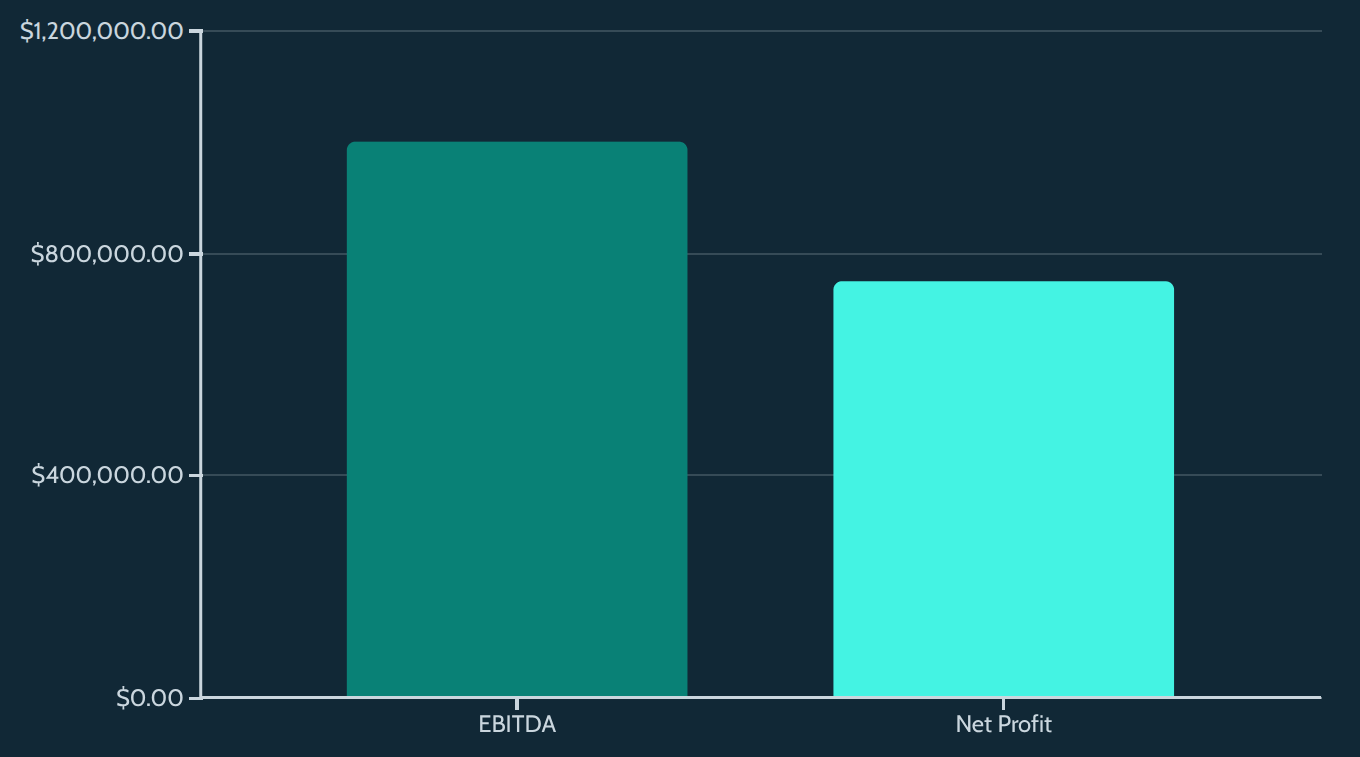
A company's Earnings Before Interest, Taxes, Depreciation, and Amortization (commonly abbreviated EBITDA - it is a measure of a company's profitability of the operating business only), thus before any effects of indebtedness, state-mandated payments, and costs required to maintain its asset base.

Ex: Buyer will want to know Seller's EBITDA to determine financial and overall value than cash profits alone (Forbes, 2021).

Owner Replacement Value (ORV)

Owner Replacement Value (ORV) represents the estimated cost to replace the owner's role and responsibilities within the company. This includes the owner's unique skills, knowledge, relationships, and day-to-day management of the business.

Calculating ORV is important because it helps determine the true value of the business beyond just its financial assets. The new owner will need to factor in the cost of hiring and training personnel to fulfill the owner's functions. By accounting for ORV, the business can be properly valued and positioned for a successful transition.

Understanding ORV is especially crucial for business owners who play a central, irreplaceable role in the company's operations. Properly quantifying this "owner premium" ensures the business is not undervalued during the exit process.

Concepts to Know:

Remaining Alpha:

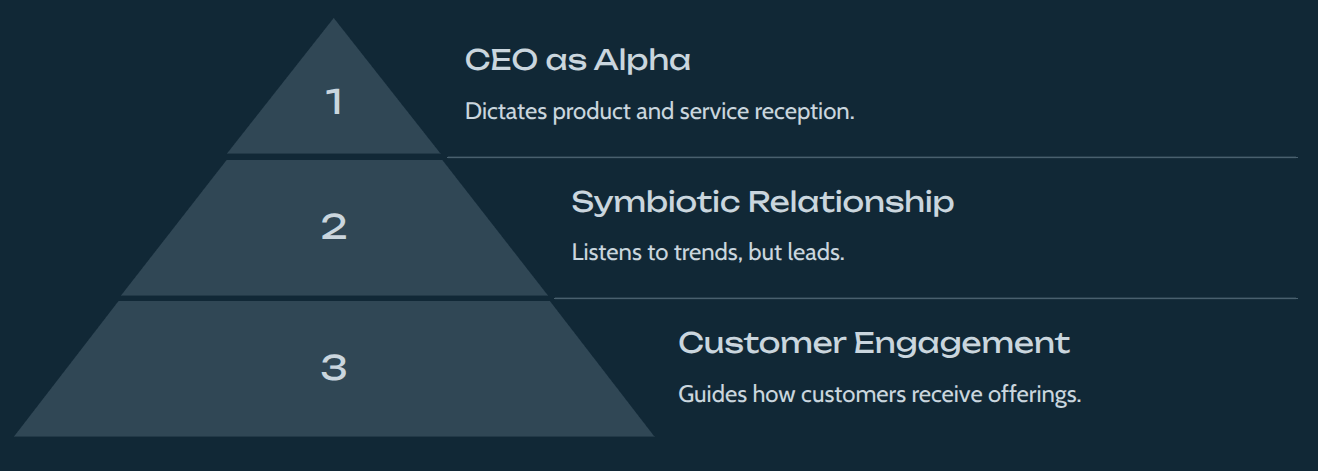
Remember, you as CEO of your company are always Alpha. Not your customers. It's a symbiotic relationship where you listen and understand trends, but you can dictate HOW and WHERE your company's products and services are received by those customers.

AVT (Asset Viability Test)

  1. How does the new asset fit into my company portfolio? (Does it represent your current or future brand?)
  2. What’s the purpose of the transaction? (To buy and hold, or to be revenue-generating from Day 1)
  3. How will it add value (Revenue/Profit) on Day 1 and Year 2, 3, 4, 5?
  4. How will this assets “work” with my other assets? (Is it complementary or competitive?).
  5. What is the new asset’s “exit plan”?
Portfolio Fit

Does it align with your brand?

Transaction Purpose

Buy and hold, or revenue-generating?

Value Addition

Revenue/Profit on Day 1 and beyond?

Asset Synergy

Complementary or competitive?

New Asset's Exit Plan

What's the long-term strategy?

Decision Fatigue & Expansive Time Fallacy

Critical concepts that impact a CEO’s decision-making and exit planning:

Decision Fatigue (DF)

Simply put, DF occurs when there are so many decisions to be made, and questions to be answered over a protracted period of time, that people lose the initial momentum and energy. Their decision-making skills suffer and standards drop.

Expansive Time Fallacy (ETF)

You believe you WILL have all the time in the world to deploy or engage a particular strategy/product or plan of action, based on your CURRENT time/energy output.

ETF is highly seductive to an optimistic CEO, who actually believes that they WILL have the time to act in the future. This is a true Fallacy because we legitimately know that time and energy are depreciating Assets for CEO's. We regularly make FUTURE decisions based on our PRESENT assessment of our CURRENT time and energy.

How to AVOID Expansive Time Fallacy (PROACTIVE)

  1. Think of the Plan/Strategy/Action.
  2. Date of potential deployment of Plan/Strategy/Action.
  3. What actions will have to happen before that happens?
  4. Will you, as CEO, be the person to lead that initiative?
  5. What else is going on around your life around that time? Family requirements? Other initiatives?
  6. "Name your 2nd" who will be your co-pilot.
  7. Plan through different "what if" scenarios that could derail this Plan.

Exit Litmus Test

Regularly evaluate your exit strategy to ensure alignment with your personal and financial goals.

6-Month Review Cycle

Conduct a balanced test for your Exit Date & Exit Number every six (6) months to maintain strategic alignment.

Wealth Quotient Value (WQV) (see below)

Apply your Wealth Quotient Test to determine HOW the sale/exit of your company will enhance your overall life quality.
Strategic Alignment

Ensure your exit timeline and financial targets align with your broader wealth and lifestyle objectives.

Future Buyer & Killing Your Darlings & Leverage

Future buyer:

The second “buyer” for your company (first is your current consumer). Can be from current partnerships, referral partners, even from COMPETITORS.

“Killing your darlings”

is a curation concept used by writers, CEOs, and artists to curate a body of work or unfulfilling paths. It literally means cutting something out, EVEN IF YOU DEARLY LOVE IT because it is NOT PRODUCTIVE to your end goal or vision. When you curate and cut consistently, you are creating micro “exits” each time.

Leverage:

Leverage comes when you work your relationships and are able to be of service. The ability to be in a room and work your magic. Work your story. The ability to meet people who know other people and can connect you, remember you. These relationships take time; take service and continuous connection. While you may be building your future exit; you’re also building your future buyer list everyday. Ownership is the stock or percentage that you own in the actual company. Leadership is the management or day to day stewardship of your company.

"Killing Your Darlings"

Cutting unproductive elements for your end goal.

Leverage

Working relationships to be of service and connect with others.

MAYA Principle & Parkinson's Law

MAYA principle:

MAYA - Most Advanced, Yet Acceptable: To sell something surprising, make it familiar; and to sell something familiar, make it surprising.* This concept of MAYA is an extension of exposure theory. (In psychology, trauma victims are continually exposed to triggers of their trauma to desensitize the magnitude and importance of that experience.)

Parkinson's Law:

Work expands to fill the available time.

Riptide Mentality (REACTIVE):

Commonly called the Riptide Mentality; this is a reactive method to calmly and non-reactively respond to current events AS THEY ARE.

Wealth Quotient Value (WQV) & Wealth Quotient Test (WQT)

Wealth Quotient Value (WQV):

What is the value and definition that you attribute to your own “wealth”?
 
What is your definition of wealth?
 
Optimal physical health?
 
Mental peace and clarity?
 
Leverage in business and life?
 
Access to the fine dining, clothes, vehicles and material life?
 
A strong shelter, furnished home to house you and your loved ones?
 
A tight-knit community?
 
Solid, fulfilling, relationships with your loved ones?
 
Choices and independence?
 
Time abundance?
 
(Fill in your definition here)

Wealth Quotient Test (WQT):

When faced with a decision - ask yourself if your decision will increase or decrease your WQV. Adjust accordingly.

Example Definitions of Wealth Possible Impact on Wealth Quotient Value (WQV)
Optimal physical health Increase
Mental peace and clarity Increase
Leverage in business and life Increase
Access to fine dining, clothes, vehicles, material life Increase/Decrease (depends on balance)
Strong shelter, furnished home Increase
Tight-knit community Increase
Solid, fulfilling relationships Increase
Choices and independence Increase
Time abundance Increase

Subscribe to THE LOTUS Newsletter